Uncategorized

25 Years Sober: The Quest for Spirit

Things were not looking good on October 8th, 2000. I’d relapsed earlier that year after two years of white-knuckled sobriety where I continually racked my brain trying to figure out how to drink without the consequences that always followed that first gulp of alcohol. I found myself once again at the same treatment center I’d been placed in two years earlier, but this time things were even worse than before. Not that the external circumstances were so much worse than last time, though they were indeed bad. The pain I felt was coming primarily from my internal world, not the external. This psychic pain was so acute that the thought of taking my own life became an obsession. I was so filled with anxiety, depression, confusion, and shame, that the mere thought of having to endure fifty more years on planet earth, especially without drugs and alcohol, seemed like a life sentence in prison.

The first time I went to treatment I was open to many of the concepts that were presented, especially the idea that people who suffered with addiction were biologically different than 85% of the population. This made sense to me since from the time I was fourteen I seemed to be able to consume amounts of alcohol that were far beyond the norm. I could also see that the idea of a recovery community was a good idea, people who were in the same boat as you and knew how to swim to shore. But the part of recovery that I couldn’t swallow was the idea of a Higher Power, something that existed outside logic and science. For me, the realm of the spirit was something I’d outgrown in my early teens, believing that religion and spirituality were in the realm of the belief in Santa Claus. I was unapologetically antagonistic toward both religion and the people who believed in it, arrogant as I was in my youth and addiction.

The Unseen has a way of backing you into an unsolvable intellectual paradox in order to get your attention. I have found that if I ignore it’s prompting, this gentle nudge becomes more forceful and unrelenting, until I must seek a solution that is outside the realm of logic and the conscious mind. My addiction had put me in such a position the second time around in rehab. So an intuitive knowing began to pull at me. It was the knowledge that if there was nothing outside of my personal consciousness and willpower to pull me out of my addiction, I would indeed succumb to its power and be forced to surrender my life. I fought this intuition the first few days in treatment, until on the fifth day a counselor at the facility didn’t like the way I spoke to him and told me that the was going to get me kicked out. I knew that if in fact I was asked to leave the facility I would more than likely die within a few days, either by an overdose or by my own hand. That night, in desperation, I did something that I never thought I would do. I sneaked into a closet in my room at the rehab, fell to my knees, and begged something to help me. I didn’t care what it was.

Spiritual awakenings are hard to explain in words. It is like telling someone what it’s like to be in love who has never had the experience. It’s probably similar to a woman trying to explain to a man what it’s like to give birth to a child. One could give a description or provide details, but without the experience, it doesn’t register on an emotional or psychological level. And as I have learned over the years, knowledge is one thing, and experience is quite another. There is an old Buddhist quote that says “The word water will not get you wet.” This points to the impossibility of trying to nail down the numinous with the rational mind.

All I can tell you is that after I got down on my knees and prayed the only sincere prayer I’d ever prayed in my life, two things happened: I’ve never since had a drink of alcohol or taken intoxicating drugs, and I’ve never doubted the existence of an unseen, all-powerful force that loves us unconditionally, even though it sometimes doesn’t feel that way. After I’d finished the prayer, I remember I got in the shower, feeling like I needed to be clean. Then I walked out of the room into the bright October sunshine and the world looked completely transformed. The people in the rehab facility seemed beautiful to me. They were glowing with their humanity, and I could see deeper into who they were no matter what type of imperfections they may have had. You could say that I became aware of their divinity, or that I could see the Higher Self, unobscured from all the judgments I was so used to placing on them. I realized that the purpose of interacting with these strangers was to try to be of service to them as best I could. And though I had nothing of the material to offer them, I could treat them with kindness, respect, and love. I also had deep intuitive knowing which eminated from inside of me, but was not produced by me. This intuition told me that if I would just focus on the status of my inner world, the outer world would provide for me what I needed if I continued to try to live my life based on spiritual principles and a desire to be of service to those I encounter.

I went back to my room, pulled out my notebook, and wrote a letter to the Spirit of the Universe. I promised this Spirit that I would dedicate my life to helping those suffering with addiction, and all I asked in return was that it help me stay sober one day at a time. Back then it seemed like I was making a bargain with God, but in hindsight, I know that God doesn’t bargain, it just provides what is asked for as long as what is asked for is of the highest good, the spiritual, not the material. But I meant what I said, and the universe knew that I was sincere in my desire to be the best version of myself, thus it has provided me with all the support and people in my life to fulfill the promise that I made that day.

So, it’s been 25 years since that spiritual awakening, the defining moment of my life, a gift that I cherish each and every day. Since then, after having had a taste of the Divine, I can tell you that nothing compares to the beauty and peace that accompanies such an experience. There is not a drink of alcohol, a line of cocaine, or an over-hyped-hallucinogen that can compare with a true encounter with the Self. The friends that I have made in recovery, the marriage I have, the call of adventure, the love that I have felt, it is indeed like finding the Holy Grail. It is the pearl of great price spoken about by prophets, and it is the mythological city of gold sought by the conquistadors.

Because of that encounter on October 8th, 2000, I have chased spiritual awakenings for the past 25 years with the same fervor that I once chased intoxication. I’ve meditated with Buddhists, prayed with Christians, read the mystics, trained with Jungians, sweated in lodges next to Native Americans, and held hands with fellow alcoholics when we’ve lost one of our brothers or sisters to the disease of addiction. And all I know for sure is that the realm of the Spirit is real. It can’t be found behind the screen of a smart phone, the shine of a new car, or in the latest post about some one-sided political opinion. As many great teachers have already told us, the thing that I seek is inside me if I’m only brave enough to look there. If only I can refuse to let the dragon at the entrance to the cave scare me away with the fire and smoke of judgement and criticism. If only I can see that beauty and love is truly in the eye of the beholder.
Uncategorized

Introduction for the Prentice Browning Memorial Scholarship to Address Unresolved Trauma.

It’s been nearly twenty years since the death of my father. I think about him often. Now that I’m in my 50s myself, his passing at the age of 59 seems particularly sad. I had a complicated relationship with my father, not uncommon for modern males who grew up in the latter half of the 20th century, when men were expected to devote themselves to the company they worked for at the expense of other aspects of the self, especially the inner life. Men have paid a heavy toll for the restrictive roles that our society has placed upon them, just as women have. This is not to say that men suffer more than women because of these restrictive roles, it is only to say that they indeed have suffered as well.

In many ways I look at my father as a tragic figure, tortured by both physical and mental torments, each of which I witnessed take a heavy toll. My father had the worst psoriasis I have ever seen. For most of his life his skin was covered with painful, itchy patches of dried skin that overtook his entire body. I only remember seeing him wear shorts or go swimming one time. And that one time, he had to answer a question about the way he looked. I can’t imagine how embarrassed he felt walking around like this all day every day, nor can I imagine the pain and discomfort he felt on a daily basis; how it affected his sleep, his mood, and general overall sense of well being. I see advertisements all the time for medical treatments they have today for psoriasis and psoriatic arthritis. But forty years ago, the best treatments they had for the condition consisted of thick, smelly, tar-based salves, and exposure to UV light. For years my father only used Ivory soap because his dermatologist told him it was best for the psoriasis, only to be told twenty years later that it was actually making the condition worse. This seemed to be the norm back then.

Psychologically, my father struggled with addiction, ultimately succumbing to lung cancer because of his dependence on tobacco. He drank heavily as well, although like most men that struggle with alcohol dependence, he never really had any outward consequences from his drinking such as a DUI. But I do remember him coming home with a black eye because of a fist fight he had while drinking. As a child, I remember sitting with my father around a keg of beer as he drank with other men in the neighborhood. It occurred to me, even at a young age, that my father laughed and smiled a lot when he was drinking. My young psyche made note of that. Alcohol could actually transform a person’s emotions, something that appealed to me at a young age. There’s no doubt that my father used alcohol in the way that most people use it, as a social lubricant to heighten the enjoyment of a given event. There is also no question that he used alcohol as a way to try to medicate unpleasant, painful emotions, which at times seemed to overwhelm him and drive him into depressive states.

This brings us to trauma. After my father died I began hearing stories about things which my father never talked about, particularly the illness and death of his own father, who also died at a young age, years before I was born. I never heard my father say more than two or three words about his own father. The subject seemed to be so painful for him that he couldn’t even think about it. From what I’ve been able to piece together, his father, my grandfather, was beaten for crossing a picket line back in the 1940s to try to feed his family. As a result he sustained a brain injury that left him permanently changed. He suffered a series of strokes that left him almost completely immobile, leaving my father to have to carry him up a flight of stairs every night to put him to bed. I was also told that my grandfather’s inability to work left the rest of the family to have to deal with significant poverty, another thing that I believe greatly affected my father. These are the traumatic events that I know of, but I think most of the wounds that my father dealt with were never acknowledged, much less spoken about.

My father worked for the railroad for over thirty years. As a child, he would sometimes take me and my brother with him to look at the trains. I found the massive machines and the men who controlled them quite awe inspiring, and I think that in many ways my father felt the same. But as I got older I saw how hard the environment was on him and the other people who worked there. The demands placed on my father were unrelenting. He was on call 24 hours per day seven days a week. Even on his days off he would receive a phone call every couple of hours. Most weekends he still ended up at the office for one reason or another. His sleep was often disrupted in the middle of the night by a phone call telling him of a train derailment which he was required to investigate, no matter the time of night or the weather. Ultimately, one of these calls resulted in him having to investigate a train wreck during an ice storm in the middle of the night. He slipped on some ice, landed on his back, and was badly injured. Two weeks later they cleaned out his office and he was soon told his services were no longer needed. The company he’d devoted most of his waking hours to for nearly four decades treated him like a beast of burden that could no longer carry his load. He was summarily put out to pasture.

Some of the trauma my father experienced at the railroad was more acute. One day he came home from work white as a ghost. His eyes were red. I could tell he was fighting back tears. It took him some time to be able to verbalize what happened. One of his co-workers and friends was crushed between two trains. My father was one of the first to the scene, having to witness the horror of the man’s death as well as the aftermath. I don’t remember much about the days following this event, but I know that it’s unlikely he would have been offered time off to grieve, much less counseling. There are also those countless other times that my father had to investigate a car wreck that involved one of the company’s trains. There is no telling how the things he saw affected him, nor is there a way of knowing how continuous exposure to toxic chemicals spilled from derailed trains impacted his health and contributed to his early death.

Often, we sanitize the past with nostalgia, talking about how much better things were back in the day. Perhaps this is true in some regard, but when it comes to mental health, addiction, and addressing trauma, we are vastly improved from where we were thirty years ago. I can’t help but wonder what it would have been like for my father if he’d had lived at a time when society was more supportive of addressing and working through one’s trauma. Would he have been happier? Would his psoriasis been better? Would he have even lived longer and been able to experience being a grandfather for more than six months? Obviously, there is no way to know. We are products of the age that we are born into, for better or worse.

I’ve been fortunate enough through my own recovery to have the opportunity to work through aspects of my own adverse experiences. These events did not cause my addiction, but they certainly exacerbated it, driving me into an abyss so dark that I nearly died before my life even started. Instead, through abstinence based recovery, spiritual work, counseling, and various other healing arts, I have been given a life that I would not trade for anything.

Now, I would like to share some of that good fortune. Thanks to my silent partner and friend, I am proud to be able to offer The Prentice Browning Memorial Scholarship which will offer individuals the opportunity to address and begin healing their own trauma. I am opening up applications for a two week inpatient stay at The Bridge to Recovery, in Bowling Green, Kentucky. This scholarship will pay for the entire two weeks, and include help with aftercare as well. While all applications will be considered, this has been set up specifically for people who practice abstinence based sobriety and have at least one year sober. This means you must not be currently using alcohol, pot, opioids, or any substance that could result in you being arrested if you operate a motor vehicle while taking. This is not to invalidate any other version of recovery, but designed to keep the recipient and the group milieu safe and functioning. The person who receives the scholarship will need to be able to be off work for two weeks and provide their own transportation to the facility. They will also have to be screened by The Bridge to Recovery to make sure they are able to be admitted. If interested, here is the process for submitting. the application:

1.) Email me your basic information, name, age, family situation, work status, phone number, and email.

2.) Submit an essay via email (1 or 2 pages.) describing your history of counseling and therapy, drug and alcohol treatment, and journey of recovery. Also, if applicable, your sobriety date. This essay should also include an explanation of your financial situation, and why you are unable to afford treatment on your own. Most importantly, please describe why you are in need of trauma treatment. For those who would prefer another option, I will also do phone interviews with those who prefer this method. Just email me and we will set up a time to talk.

3.) I will be the one reading the applications and awarding the scholarship. I will also be working with The Bridge To Recovery to ensure that the recipient meets initial criteria. After the scholarship is awarded it will be dependent on the recipient meeting the admission requirements of the admissions team and clinicians at The Bridge to Recovery.

4.) Please send the applications and questions to the following email:

jeffbrowning0@gmail.com

Uncategorized

Carl Jung: Individuation and Recovery

Last September, I had the pleasure of attending a two week depth psychology training in Switzerland which focused on the psychological theories of Carl Jung and Marie Louise Von Franz. Since then, many people have asked me what I learned that I can integrate into my counseling practice. I’ve noticed that whenever anybody asks me the question I struggle to give a good answer for a variety of reasons. I’ve thought about this a lot, realizing that one of the reasons that I have difficulty is because by its nature, Jungian psychology is distinct from many modern therapeutic techniques. Not that Jungian psychology is opposed to the many advances that we have made in the realm of mental health, it just takes a much different approach. In fact, Jungian psychology warns against being too attached to any one approach, including its own. Now that I have had a few months to let the experience sink in, I think I can express to some degree why I have embarked on the journey to become a Jungian analyst, and how I think this can help me become more effective at producing positive change in my clients and myself.

I was talking to an acquaintance about my upcoming trip a few months before I left, explaining that I would be doing two weeks of training in Jungian psychology. They told me that Jung’s theories and modalities had been proven obsolete, a statement that seemed so absurd to me that it literally left me speechless. (Not a common occurrence.) All I could do was chuckle and excuse myself from the conversation. In hindsight, it’s obvious that In order for her opinion to be true concepts like extrovert and introvert would be meaningless, terms like archetype and collective consciousness would be removed from the lexicon, and the Myers-Briggs personality test would disappear. Most importantly, it would mean that 12 step recovery is irrelevant to the millions of people who have found release from crippling addictions.

Jung was considered a silent co-founder of Alcoholics Anonymous because he informed a patient he was treating that he’d reached the limits of his ability to help him to stop drinking. He knew that alcoholism was a complex, multi-layered psychological problem that can be supported by science, but not cured. He understood that there was a hidden dimension of addiction that cannot be quantified. That hidden dimension is the Spirit, or if you prefer, the Self. The humility that Jung demonstrated set in motion a chain of events that would culminate in the modern recovery movement.

This idea that Jung himself proposed that his psychology was insufficient for someone in active addiction was further impressed upon me at the training I attended in Europe at the training. A Swiss psychologist who’d heard I was an addictions counselor pulled me aside one day to ask me if I could help her with a client who was struggling with alcoholism. She told me she’d tried many different ways to reach this person but found herself feeling hopeless and frustrated, unable to facilitate the change both she and her client desired. I was glad to help in the way that I could, emphasizing that even with twenty years of working with substance abuse I often feel quite powerless myself. This interaction did not cause me to question the validity of Jungian Psychology, only to see its limitations. Trauma therapy, specifically EMDR, is one of the most beneficial tools we have at our disposal to lessen anxiety, reduce PTSD, and turn down the volume on intrusive thoughts. However, it will not arrest or eliminate an alcoholic’s desire for intoxication or an opiate users’ craving for oblivion. There is not a single modality, drug, technique, school of psychology, psychedelic, or self-help book that can entice someone who longs for constant escape from their individual reality to turn and face their agitated self who is trapped in psychologically unbearable circumstances. This is why our society’s attempts to solve the addiction problem always results in moderate progress at best. As with the fentanyl crisis today, the so-called crack epidemic in the 80’s, and the heroin crisis in the early 2000’s, too much attention is given to a specific drug and not enough attention to our relationship too intoxication itself. As a country, and in the family of origin, people talk about the tragedy of the thousands who die of fentanyl overdoses while finishing off their fourth glass of wine while popping another THC gummy. But that’s a whole other conversation.

My interest in depth psychology is not so much for the benefit of the person still in the midst of their addiction, there are strong resources for those locked in its grip. The place where I think it can have the most impact is for those of us who have years or decades in recovery but still struggle to find balance, peace of mind, and successful romantic partnerships. Through the process that Jung called individuation, I believe that people can come to know their true Self and tap into the power of a fully realized personality. This process begins with identifying different parts of the personality that have been suppressed below consciousness, such as the shadow, the anima and the animus. Jung believed that these splintered parts of our personality were observable through the process of analysis and a relationship with the unconscious, through dreams, active imagination, and even artistic creativity. And though the process of individuation is quite demanding, the rewards for myself have been quite striking.

So far on my journey I’ve been a student of Buddhism, Christian mysticism, psychodrama, trauma therapy, 12 step recovery, and many more. Last year I even did ice baths for about six months straight. All of these have added to my happiness and well being. As I mature, I become more and more wary of anyone or any technique that claims to have the quick fix to mental health and recovery. There is no one thing that will work for everyone. We are human beings, not machines. As such, we cannot be fixed, only healed, nurtured, and awakened as the individuals we are.

addiction · Uncategorized

What Doesn’t Get Better

As a person in recovery who also works as an addiction counselor, I can confidently tell those who are struggling to get sober that things will get better. The cravings will dissipate, the feeling that you’ve lost your best friend will wane, and some sense of joy and happiness will eventually find you again. Early in my own recovery it was crucial that I come to believe that the crippling fear and anxiety I experienced on a daily basis would give way to moments of relative calm and peace. The first six months after treatment I felt like my IQ had dropped twenty points. I would become tongue-tied at the drive-thru, the bank, or even answering a phone call. To hear from other recovering people that things would get better was a huge relief, but to believe it was life changing.

But there is one thing that’s never gotten any better. Losing beautiful people to the disease of addiction hurts as much today as it did twenty years ago. When I was younger I thought I had become numb to friends and family that were lost to addiction, often telling people that I was used to it. I realize this was just wishful thinking, a way I tried to cope with the severity of grief and the realization that people I cared about would continue to have their lives cut short on a regular basis. Today, I know that unacknowledged emotion feels like numbness but is in fact a form of dissociation.

Not long ago, I was processing with my own therapist about another person I counseled who had succumbed to the disease of addiction. She asked me how many people I have worked with over the years who have died from addiction or mental illness. I told her it was too many to count, but that if I had to guess it would be between 100-150. Shocked, she told me that in her twenty-five years of practice she knew of one client who had died prematurely due to a mental health crisis.

I am more skilled at dealing with grief today. I talk to people, I surround myself with people who understand addiction, I accept my feelings, I practice my spirituality. In that sense, I suppose it does get better. But each time I get a text that tells me to call NOW because it’s an emergency, the surge of fear that shoots up my spine is always the same. I’m faced with the reality that another father, mother, brother, sister, daughter, friend or companion has been lost forever.

Despite what most believe, we don’t die from addiction because of a failing. We die because the illness has overtaken us, overwhelmed us, and because we have lost the ability to fight it any longer. But for every person that is lost to the disease of addiction, I can tell you about ten people who have turned their life around in miraculous ways. I hold those people close to my heart.

Uncategorized

20 Years Sober: The Power of US

Under the lens of 2020, a man who hasn’t had a drink of alcohol or taken an intoxicating drug in 20 years is a small story. There has been a tremendous amount of suffering in our country this year. In the past six months I have counseled people who have lost loved ones to the virus, to suicide, and of course addiction. I have spoken to people who continue to experience racism and abuse on a regular basis, as well as those who have lost their businesses and livelihood from the effects of this bizarre year. In myself, I have felt sadness, confusion, grief, anger, and most of all powerlessness. But not once have I wanted a drink, nor have I lost hope in our capacity for goodness or the belief that there is a loving force underlying everything in the universe. For a chronic alcoholic, that is nothing short of a miracle. So As I celebrate the blessings of the life I have been given in twenty years of sobriety, a piece of my heart is with all those who still suffer from a barrage of fear, confusion, and pain that has been this year.

I was once told that congratulating an alcoholic for not taking a drink is like congratulating someone for deciding to leave a burning building. True in a sense, but as anyone who has tried to get sober or change their life knows, it is far from that simple. Were it not for the hundreds of people who have helped me along this path, I would have died an alcoholic death before I reached my 30th birthday.

On October 3, 2000, two men drove 300 miles to pull me out of the apartment I was living in, a place where I was literally trying to drink myself to death. They took me to a treatment center outside of Nashville, paid for by my loving mother and father who were willing to sacrifice their money for one last chance to save a life that many had deemed hopeless. At the treatment center I was taught that I was sick, not evil; a concept that shifted the way I saw myself. There isn’t much hope for an evil person, but someone who is ill might be able to heal. There I met a Vietnam-Vet named “G”. He took me under his wing, showing by his words and actions what it meant to try to live a spiritual life, rooted in compassion, kindness, forgiveness and responsibility. He would lay the groundwork for how I would develop a relationship with a God of my understanding, the center of how I was to build my new life.

When I left the treatment center I stayed in a $85 a week halfway house with twelve other men trying to get their life together. We sat around smoking cigarettes and telling stories of our addiction, laughing at our insanity instead of crying over it. The manager of the house was tough, but fair. He’d leave a stern note on your bed if you left it unmade, not taking excuses for bad behavior or irresponsibility. He understood that the alcoholic consciousness is locked in a self-centered loop that has to be broken. If you were caught stealing, drinking, drugging, or being a general narcissitic-pain-in-the-ass, you’d find your stuff boxed up and waiting for you on the front porch when you got home from work. (he called that a boundary) My eleven month stay there there taught me how to be grateful for what I had instead of complaining about what I didn’t. It taught me about accountability, brotherhood, and the importance of telling the truth.

During that first year of sobriety I worked at a zoo flipping burgers, waited tables downtown, and washed cars at a Ford dealership for seven bucks an hour. Some weeks I barely had money to buy food, but I never starved or went without anything I really needed. Mostly that first year, I sat around with men and women of all races and backgrounds who talked about how to stay sober one day at a time. They taught me how to live by spiritual principles, how to be an adult, and that there was nothing that a drink or drug could do for me anymore except take me back to the hell that was my life before sobriety. During those times, nobody ever asked me what political party I preferred or what religion I thought was best. They told me that my code for interacting with the world was love and tolerance; no exceptions. They told me I’d never do it perfectly, but that was what I should strive for. And so I have, some days better than others.

When I reflect back on all the friends, family, and strangers who have helped me over the past two decades, I am truly in awe of how much goodness there is when I choose to put my attention where it belongs. I remember when I was about a year sober, my car broke down in the middle of a busy intersection in Nashville. As many busy people who looked and talked like me drove past without blinking, a truckload of Spanish-speaking men jumped out and helped me push it into the parking lot of a restaurant, refusing to leave until I could assure them that I had someone coming to help me. I think of all the teachers and mentors I’ve had in my career, those who were patient with me when I needed it, and honest with me when I didn’t want to hear the truth about my blind spots. I think about the twenty years I’ve spent with my beautiful wife, how she has never expected anything of me other than to be the best version of myself. I hold in reverence the keepers of our world’s wisdom traditions, those that have been so key to my happiness, well-being and my ability to help those who still suffer. Without Buddhism, I would never have understood the mind and emotions. Without Christianity I would have no idea about sacrifice and love. Without Taoism and Hinduism, the concept of surrender would have been only a theory. Were it not for the scientist who developed the anti-depressants I took after my father died, I’m not sure if I would have stayed sober through the grief that I experienced. For me, there has never been a conflict between the intellect, spirituality, science and rational thought.

Overall, I find little difference between the world twenty years ago and today. There are many good people, many fearful people, some sick people, and a few who can’t see past their own trauma and woundedness, taking it out on others to make themselves feel better. The most disturbing thing I see today is the lack of common decency we have for one another’s differences, and that somehow we have been led to believe that our opinions are our accomplishments. I was taught early on that what I said and believed was meaningless if I could not follow it up with action. It was pounded into my thick skull that I needed to focus primarily on my own internal state, rather than the state of the world. If I couldn’t do that I was likely to drink again, because that is the core of alcoholism and addiction-trying to bend reality to my desires, instead of adapting myself to meet conditions under the banner of spiritual principles.

So, a heartfelt thank you to all the seen and unseen who have helped me throughout these past twenty years, including all those I have been privileged to work with and counsel throughout they years. I look forward to the next twenty years, affirming my commitment to my family, my spirituality, my community, and those who suffer from addiction and mental illness.

Peace, Jeff Browning

Uncategorized

A Mother’s Day Card

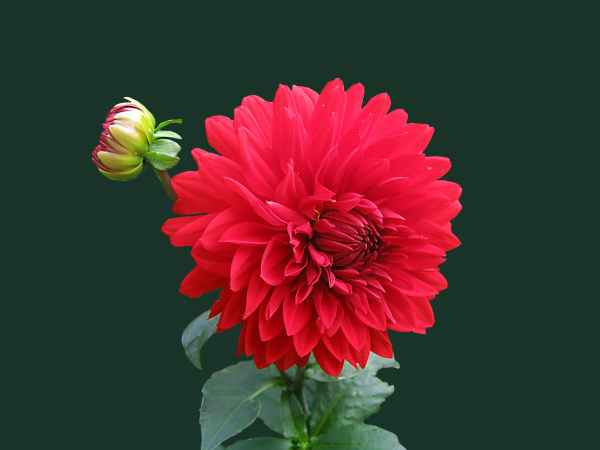
red dahlia flower

All good mother’s are intuitive. They anticipate when their children needs a diaper change, when it is time to feed them, and when their cries signal something more than just fussiness. At times they even appear to possess latent psychic abilities, able to feel when their children are up to something they shouldn’t be, or if they’re in some type of danger. And they understand that more than anything their children need not just love, but unconditional love; the kind of love that allows for mistakes and imperfections. Unconditional love does not hold grudges. It disciplines without shame or condemnation so that the child grows up with a secure sense of self, nurturing exploration and self-forgiveness. My mother possessed all of these qualities, who along with my father, raised myself and my brother with a strong sense of autonomy and individuality, allowing us to grow up with the ability to speak our minds without fear of being shut down or diminished.

Great mothers not only anticipate the needs of their children while they’re young, but also what qualities they’ll require for successful navigation of the world once they enter adulthood. Great mothers understand the words of the poet Kahlil Gibran:

Your children are not your children.
They are the sons and daughters of Life’s longing for itself.
They come through you, but not from you,
And though they are with you, yet they belong not to you.

My mother taught me how to read at a young age, instilling in me a love of the written word. She was always reading herself, usually books about spirituality or religion. She showed me how to be curious about things I didn’t understand, as well as teaching me that there is more to the world than what we can perceive with our five senses. When I aged into my cynical teen years, I decided that religion and spirituality were not for me; I was more of an intellectual, having no need for the faith of my ancestors. But at twenty-seven, when my alcoholism finally crushed me, I was left with no option other than to reach out for a God unknown.  It was the faith that my mother demonstrated that enabled me to find a spirituality that would become the foundation for my recovery. Books she gave to me became vital to my early sobriety. Writers like Victor Frankl, Carl Jung, Anthony De Mello, and Thomas Merton were the teachers that altered my perception, showing me that faith and the intellect were not mutually exclusive, but worked in conjunction to form a healthy spirituality.  And when my journey took me into Buddhism and Eastern Philosophies, she never insisted that I adopt her idea of a Higher Power, giving me books on Buddhism, Taoism, and Hinduism.

My mother has always been an example of service and generosity. She visits the lonely and sick in nursing homes, giving of herself without expecting anything in return. She taught me that in order to find meaning in life, a person must strive for something more than one’s own desires. Again, these lessons are the essentials of not only my sobriety, but also my marriage and career as a counselor and healer.

There is a story my mother tells that I thought about often when I was trying to get sober and no longer liked the person I had become in my alcoholism. I was about seven or eight years old. The school was having some type of May-Day where the kids had races and tug of war and other games. My mom watched with the other parents as I stood around the starting line with the other kids, waiting for my turn to shine. When the race began I took off sprinting, only to come to a dead stop halfway through the contest. My mother couldn’t figure out what I was doing, watching me walk off the track into the grass where I jumped into a ditch. A few seconds later I emerged with a single red flower in my hand. Abandoning the race, I walked to my mother and handed her the flower, a big grin spreading across my face.

That was the part of myself that I lost in my addiction, the part of myself that put love, beauty and generosity above all else. And that is the part of myself that my mother helped me get back in my recovery. For that, and thousands of other things she has done for me over the years, I am eternally grateful for the mother I was gifted. Though I can’t see her this Mother’s Day because of the Corona Virus, she is still near to my heart.


Uncategorized

The New-Old Normal

I’ve wanted to write something for a while, aware that words can only do so much. But the written word has given me comfort in my darkest times. And the last month has certainly been dark and fearful for most of us, filled with uncertainty and the dissolution of routines and activities that give us meaning and purpose. I’ve heard life since the crisis referred to as “the new normal.” The term seems accurate, but from a broader perspective, maybe not so much. It has only been in the last one hundred years that our ancestors have brought a small percentage of the earth’s population to a place where the struggle for daily survival is not at the forefront of our minds. In the year 1900, the average life expectancy in the United States was around 50 years old. That same year, 30% of deaths that occurred in the United States were children under the age of five. Today the percentage is around 1.5%. That means that when my great-grandmother was a child, a plethora of diseases and infections could have killed her at any time, the discovery of penicillin and antibiotics still a couple of decades away. I remember talking with my great-grandmother when she was in her eighties. I wish we had her generation around to tell us what the great depression was like, maybe reassure us that difficult times are nothing new, remind us that all things pass eventually.

I have always looked to secular and spiritual saints to help me cope with negative emotions and trying times, finding inspiration from those who have walked through the fire without becoming fully engulfed in the flame. One of the men who I turn to in dark times is Victor Frankl: holocaust survivor, psychiatrist, physician, writer, and reluctant optimist. Frankl observed the effects of the concentration camp on his fellow prisoners and discovered that those who survived with their dignity and humanity intact were the ones who managed to cling to their purpose. Frankl watched people slowly allow the horrors of the concentration camp strip them of their humanity, a fact which he never faulted them for, understanding that the tortures they endured could turn anyone into a self which was unrecognizable. But Frankl refused to allow the Nazi’s to determine how he would conduct himself. In his book ‘Man’s Search for Meaning,’ Frankl summed up his awakening with these words: “Everything can be taken away from a man but one thing: the last of human freedoms is to choose one’s attitude in any given set of circumstances.” If Victor Frankl can make such a statement after enduring one of the greatest atrocities in human history, then I can choose the way that I deal with events like this one, or the death of a loved one, or the removal of my conveniences, or financial insecurity. “When we are no longer able to change a situation, we are challenged to change ourselves,” he stated. For me, this is the calling when faced with a dilemma that causes me to feel powerless and afraid.

I’ve thought a lot about our current situation and talked to many people as they try to make sense of it all. I keep coming back to my experiences working in a state prison for six months back in 2016. The anxiety, the fear, the isolation, the lack of resources, the greed. All these things were normal life for the men and employees in the prison. Everybody was afraid of everyone else, looking over their shoulders and telling people to get away from them. Survival, for the most part, was all that mattered. And in order to survive, positive emotions like compassion, humility, love, and intimacy were sacrificed or tossed away. One day I was talking to an inmate whom I had become friendly with while he attended my group therapy sessions. He’d discovered Islam while in prison and had used this spiritual path to help him find purpose and hope. He would bring me  verses from the Koran to read, while I brought him quotes from the Buddha and Thomas Merton. As we were talking on that particular day his expression suddenly became pensive and sad.

“I’ve got to tell you something that I think is important,” he told me. “If anything bad ever goes down in here, you have to understand that you are on your own.” Confused, I asked him what he meant. “Look, the prisoners in here like you-I like you. But if there’s ever a riot in here or things get crazy, nobody is going to help you. You’re on your own. In prison it’s us against them. And your not one of us.”

One week later, there was a riot in one of the pods. Inmates kidnapped three guards and stabbed them in the head, beating them almost to death. Had it not been a weekend, I easily could have been in that building. One month later I was no longer working at the prison. The environment, saturated with paranoia, violence, racism, and corruption was just too much for me. To this day, I still feel guilty for having to leave my job at the prison, feeling that I never accomplished my goal of bringing drug and alcohol treatment to a population that will probably never get it.

My fear of our current situation is this: I don’t want to fall prey to the belief that it is every man and woman for themselves. I don’t want to convince myself that a digital image of a human being is the same as looking at them face to face, soul to soul. I don’t want to think that my comfort is more important than someone’s life, nor do I want to lose touch with the truth of the human condition. Life is fraught with illness, death, uncertainty, and feelings of powerlessness. But it is also imbued with beauty, kindness, love, wonder, friendship, joy, and rich, textured experiences that create a full and happy life. For now, I’ll make the choice to stay focused on the positive.

**The disease of addiction does not take a break. Mental health is equally important as physical health and right now support groups are temporarily unable to meet. I’m still counseling during this crisis, taking new clients in my private practice and doing Telehealth sessions when appropriate.

Uncategorized

Opening Up To Fear

Maybe I’m just more aware of it since Halloween is fast approaching, but I have noticed a lot of friends and clients dealing with fear and anxiety. It’s no secret that many people with substance abuse disorders struggle with anxiety, using drugs and alcohol to quiet their overactive nervous system which has sometimes been rewired due to various forms of trauma they have experienced. Often times family members of those struggling with addiction are the most affected by fear, as the threat of death or incarceration for a loved ones is a very real possibility. And unfortunately, sometimes the worst fears about addiction are realized. Obviously, fear is not reserved only for people or families facing addiction, it is a reality for all sentient beings. Realizing this allows me to have compassion for all who I come in contact with on a daily basis.

In my experience it is helpful to separate legitimate fear, which is calling us to action, from mind-generated fear which is causing us worry and stress,

William James, one of the father’s of modern psychiatry, said that most fear and stress is the result of a faulty belief system. To overcome fear we must be willing to change our belief system. In working with clients, some of our time together often involves the deconstructing of family beliefs around money, success, relationships, and family expectations. If there is addiction in the family system, the entire family tree may be rooted in generational fear that results from dysfunction, abuse, prejudice, secrets, and rage. We unpack these beliefs and see if they still serve a purpose or if they have become a hindrance to whatever goals they are trying to achieve.

When I got sober, I had a clear realization that the philosophy upon which I tried to build my adulthood needed to be completely obliterated before I could begin moving away from the horrifying fear of my last few years drinking. In my teens and twenties I had adopted a nihilistic view of the world that supported my addiction. If life is meaningless, I thought, then it only makes sense to pursue pleasure and self-gratification above all else. This worked fine when intoxicated, but when sober I was possessed by a paralyzing fear that I couldn’t shake without the help of alcohol. When the emotional pain of my failing life was severe enough, I became willing to let go of beliefs and opinions that no longer served me and adopt those of people who seemed to be able to face life with courage in the face of fear.

Along with a new belief system that included the view of a benign universe, I began learning meditation and was able to observe the mind’s fearful nature. Once I saw the brain as an organ and not myself, I was able to detach from fearful, mind-generated anxieties. These things, along with the ability to feel and express emotions, dramatically reduced my fears and allowed me to be at ease in my body for most of the hours in a given day.  Just verbalizing to someone when I’m afraid tells the brain and nervous system that it can relax because the fear has been acknowledged.

Here are a few of my favorite quotes about fear that I’ve heard or read about over the years. I share in the hopes that you live in more faith and less fear.

Thanks for reading. Happy Halloween.

1.) Fear is paper-thin. It takes one courageous step to walk through it.

2.) A ship in harbor is safe, but that is not what ships are built for. – JOHN A. SHEDD

3.) Security is mostly a superstition. It does not exist in nature, nor do the children of men as a whole experience it. Avoiding danger is no safer in the long run than outright exposure. The fearful are caught as often as the bold. Faith alone defends. Life is either a daring adventure or nothing. -HELEN KELLER

4.) Behold the birds of the sky, that they neither sow nor reap, neither do they gather into barns, and your Father who is in Heaven sustains them; behold, are you not better than they? But who of you is able to add a foot to his stature through worry? And why are you taking pains about clothing? Consider the lilies of the field, how they grow without laboring or weaving. But I say to you, not even Solomon in all his glory was clothed like one of these. But if God so clothes the grass of the field that is today and will fall into the oven tomorrow, does he not multiply more to you, Oh ye of little faith? .-BOOK OF MATTHEW

5.) Siding only with those who agree with me is greed. Opposing those who don’t agree with me and wishing they would go away is hatred and fear. Not being able to see this mechanism is ignorance.- GUO GU, ZEN TEACHER


Uncategorized

Advice and Optimism Regarding the Opiate Crisis

In light of National Overdose Awareness Day, which took place over the weekend, I wanted to write about some of the things I have observed and been told over the years that seem to be effective in preventing opiate and opioid deaths. I counted over fifteen clients on my caseload that have over a year in recovery from opiates, most of whom were IV heroin users. A couple of weeks ago I began asking some of them what they thought were some important pieces of their recovery, and how they have gone from being another sad statistic to happy, productive members of their families and communities.

Each of my clients who are in recovery from opiates have been admitted to at least one inpatient treatment center, most of whom required at least two or three admissions before finally becoming sober for good. They speak of relapse as sometimes being part of the process in order to realize the severity of their addiction, pointing to the financial sacrifice of their families who understood that relapsing is often part of the recovery process. Many of them also relate that staying in a treatment center for an extended period of time (usually 2-3 months) was key to finally turning the corner and beginning to see progress. The reason long term treatment is so key is that it gives the brain time to heal, allowing for better executive functioning instead of being enslaved by the addicted brain which operates from a primitive level of craving and immediacy.

Nearly all of those who are abstinent spent a period of time in a good recovery house after they discharged from treatment. The recovery house serves many purposes, but some of the most important are accountability, structure, and a living environment where the use of alcohol and drugs is prohibited. Yes, sometimes people do relapse in recovery homes, but if the ownership of the house implements a zero tolerance policy  those who relapse are quickly identified and either asked to leave or readmitted to a treatment center or detox ward. There is also the Tennessee Alliance of Recovery Homes  that sets standards and practices that ensure that supportive housing is implementing best practices.

All of my clients utilize or have utilized 12 step recovery. Some no longer attend meetings, but most do. 12 Step recovery is not the only method for sustained or early recovery, but in my experience it is the most effective for overcoming the incessant pull of addiction and teaching the recovering person how to navigate the world without the use of consciousness blunting substances. I have worked with many clients who have a strong aversion to AA or NA meetings, some who have felt they encountered a heavy-handed approach to spirituality. Most of the time these clients can work through their resistance, encouraged to find meetings that are less rigid and open to many different approaches in regard to finding a healthy way to interact with the principles of the 12 steps. Buddhist recovery groups have become widely available in the last ten years, and there is also Celebrate Recovery, which caters to those who wish to have their recovery focused around their Christian faith.

The efficacy of opiate antagonists such as Naltrexone and Vivitrol have been well documented. I have had clients tell me that these medications have been “a game-changer” in regard to reducing the cravings and obsessive thoughts associated with addiction. In the last year I have recommended these treatments to almost all clients who meet criteria for severe opiate and alcohol use disorders. Additionally, medication assisted therapies such as Suboxone can also be implemented, especially for clients who have had repeated overdoses and who have not responded to abstinence based treatment.

Finally, I will advocate for the implementing of a licensed alcohol and drug counselor or addiction trained therapist to assist in the recovery process. The importance of helping a client cultivate their strengths, reduce anxiety, and guide them to needed resources cannot be understated. UTILIZING A GOOD THERAPIST OR COUNSELOR IS AS IMPORTANT FOR FAMILY MEMBERS AS IT IS FOR THOSE WHO ARE FIGHTING THEIR ADDICTION.

In my experience, a realistic, optimistic, holistic, medically appropriate approach will eventually solve the addiction crisis that has decimated this country for not just the past ten years, but since its inception. The lethality of drugs such as heroin, fentanyl, and opioids have raised the stakes, forcing ourselves and our families to stop ignoring how our culture glorifies and glamorizes the use of alcohol and drugs.

Uncategorized

EXORCISING ADDICTION

Not long after I got sober in October 2000, they re-released the movie “The Exorcist” in theaters. Looking for things to do in my early sobriety, I went to see the movie with several friends I had made while in treatment for my addiction, a couple of whom were ultimately killed by their disease. Though I had seen the movie in the past, the plot of a young girl possessed by something destructive and evil seemed to take on new meaning for me, even though I still wasn’t convinced that things like demons or evil existed. However, coming out of nearly fourteen years of active alcoholism, I was convinced that something outside of myself had taken over my body and personality, turning myself into a creature that only vaguely resembled my old self.

About half way through the movie there is a scene where the two exorcist priests have taken a break after hours of futility, failing to remove the demon from the young girl, witnessing her doing things that could only be described as sub-human. At one point, the younger priest turns to the older and begins asking questions about this evil, confused and terrified about the what he is witnessing.

He asks the older priest imploringly:

What is the point of this evil? Why this girl?

The older priest, answers his question with this statement:

I think the point is to have us despair, so that we see ourselves as animal and ugly and reject the idea that God could possible love us.”

When I heard those words in the theater, a cold chill ran up my spine. I had found the perfect description for what the disease of addiction had done to me for the past decade.

In the last years of my alcoholism it seemed as though I had been separated from all things good in this world. My capacity to love was gone. I couldn’t sleep or eat, the ability to receive joy was destroyed, and my creativity was no more. But the most damaging part of my addiction was the way in which it obliterated my  capacity to see the beauty of the world around me, both seen and unseen. The only way to experience the above pleasures was to continue to use the drug that was causing the problem in the first place. That is what they mean when they talk about powerlessness in 12 Step Meetings.

One of the reasons  I write this blog is to generate compassion for those suffering with addiction. After working in the field for nearly twenty years, I know for sure that most people who are struggling with addiction and mental health issues do not want to be the way that they are. This is difficult to see, because it looks like they are making the choice to live the way they live, destroying their bodies and families the way they do, but in my experience this is rarely the case. Science is beginning to recognize the truth of this statement, identifying deficiencies in the addicted brain that leave some people with little choice but to try to make themselves feel better by altering their neurochemistry. As I have said for years, all addicts and alcoholics are self-medicating.

In The Exorcist, both the priests and the child’s mother must look past the horrifying behaviors she is exhibiting while possessed, remembering that underneath all the hatred and ugliness, there is a little girl trapped within the evil. The ability to gaze deeply into the depths of human beings and see the divinity within is the greatest hope for healing addiction, and probably most of human evil we encounter everyday.